
How Long Do Golf Cart Batteries Last?
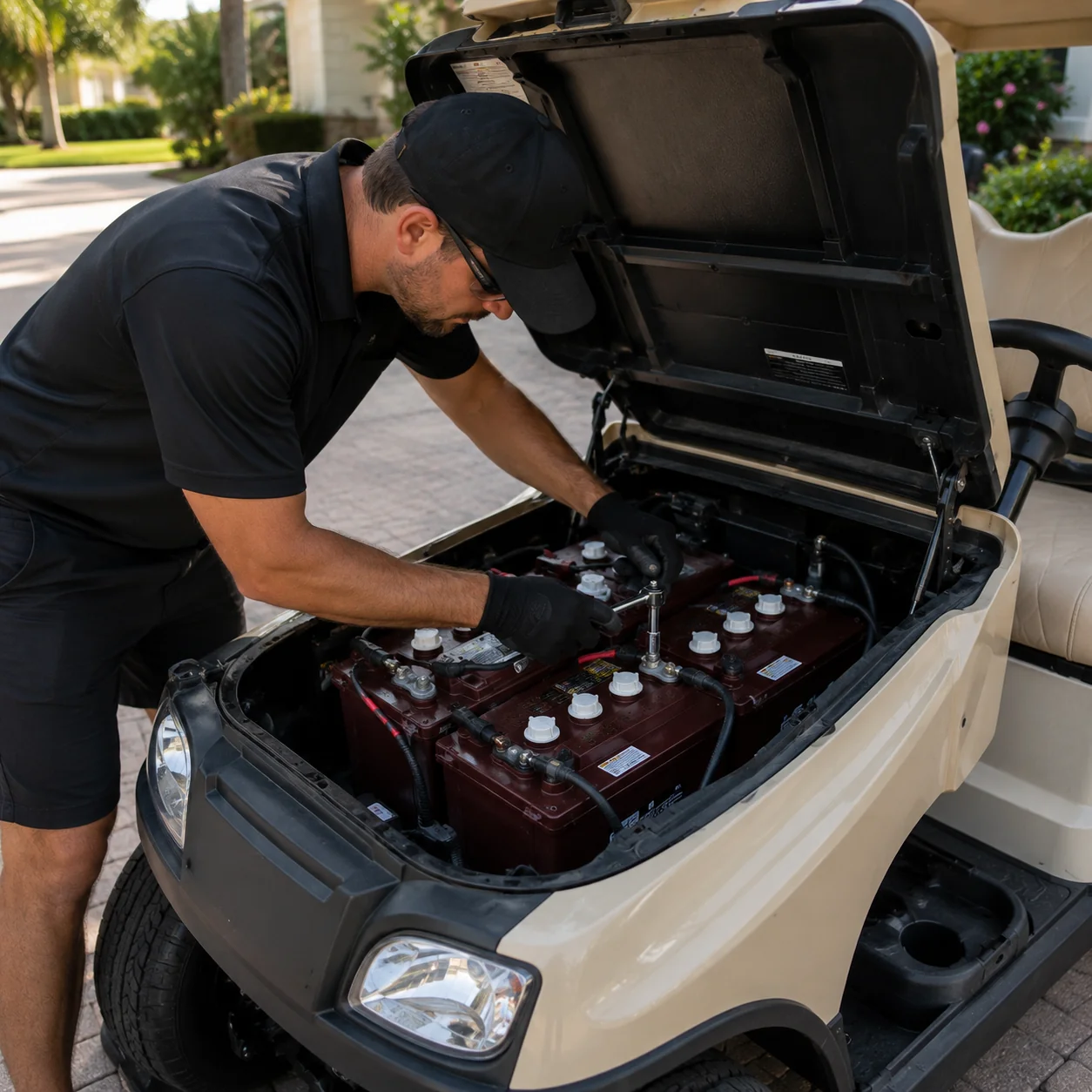
Most golf cart batteries last between four and six years for flooded lead-acid and eight to twelve years for lithium, but real-world lifespan depends heavily on how the cart is used, charged, and stored. In a warm climate like The Villages, heat and year-round use can shorten that window noticeably if a few simple habits are ignored. Understanding what drives battery wear helps you get every possible mile out of your current pack before a full replacement becomes necessary. Learn more about Golf Cart Battery Replacement.
Lead-Acid vs. Lithium: What the Numbers Actually Mean
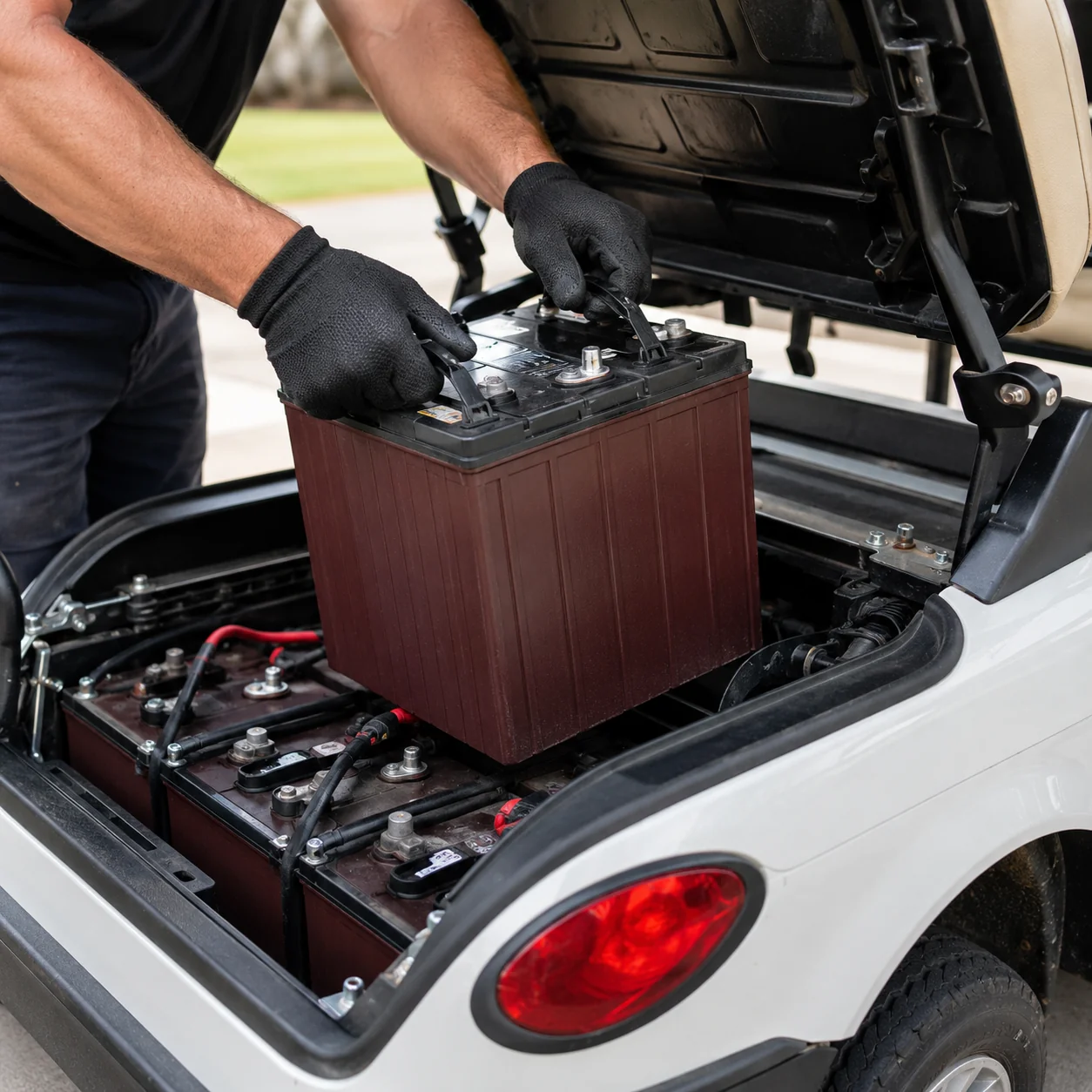
Flooded lead-acid batteries are the traditional choice and cost less upfront, but they require regular water maintenance and lose capacity faster under heat stress. Lithium iron phosphate batteries carry a higher purchase price yet deliver roughly twice the cycle life, charge faster, and need almost no routine maintenance. For residents who drive daily in a warm community, the longer service life of lithium often offsets the initial cost difference over time. Knowing which chemistry is in your cart sets realistic expectations for when you should start budgeting for replacement.
Why Batteries Wear Out Faster in Warm Climates
Heat is the single biggest enemy of battery longevity. Every ten-degree rise in average operating temperature above roughly 77 degrees Fahrenheit can cut lead-acid battery life nearly in half, and The Villages sees summer temperatures well above that for months at a stretch. Lithium chemistry handles heat better, but even lithium packs degrade faster when they sit fully charged in direct sun or inside a hot garage.
Charging habits matter just as much as temperature. Leaving a lead-acid pack in a partial state of charge for extended periods causes a process called sulfation, where lead sulfate crystals harden on the plates and permanently reduce capacity. Overcharging generates excess heat and off-gasses electrolyte, which is why using a smart charger that shuts off automatically is worth the investment.
- Chronic undercharging causes sulfation in lead-acid batteries
- Overcharging raises internal temperature and boils off electrolyte
- Storing a cart unused for weeks without a maintenance charge accelerates self-discharge damage
- Corroded or loose cable connections force the battery to work harder on every discharge cycle
Six Factors That Shorten Golf Cart Battery Life
Each of these issues compounds the others, so addressing even two or three can add a meaningful amount of time before you need a full replacement.
Excessive Heat:
Ambient temperatures above 90 degrees accelerate chemical breakdown inside both lead-acid and lithium cells. Parking in shade or a ventilated garage makes a real difference.
Infrequent Use:
Batteries that sit discharged for weeks sulfate or fall into deep discharge states that a standard charger cannot fully recover. A monthly maintenance charge prevents this.
Wrong Charger:
Using a charger not matched to your battery voltage or chemistry can overcharge or undercharge every single cycle, compounding wear with each use.
Low Water Levels:
Flooded lead-acid cells need distilled water added regularly. Exposed plates oxidize quickly and the damage is irreversible once it occurs.
Heavy Loads:
Consistently carrying maximum passenger weight or towing accessories pulls higher current, generating more heat inside the cells and deepening each discharge cycle.
Corroded Connections:
Terminal corrosion increases resistance, which forces the battery to deliver more power to compensate. Cleaning terminals every few months is a simple way to protect pack life.
Practical Steps to Maximize Battery Life Before Replacement
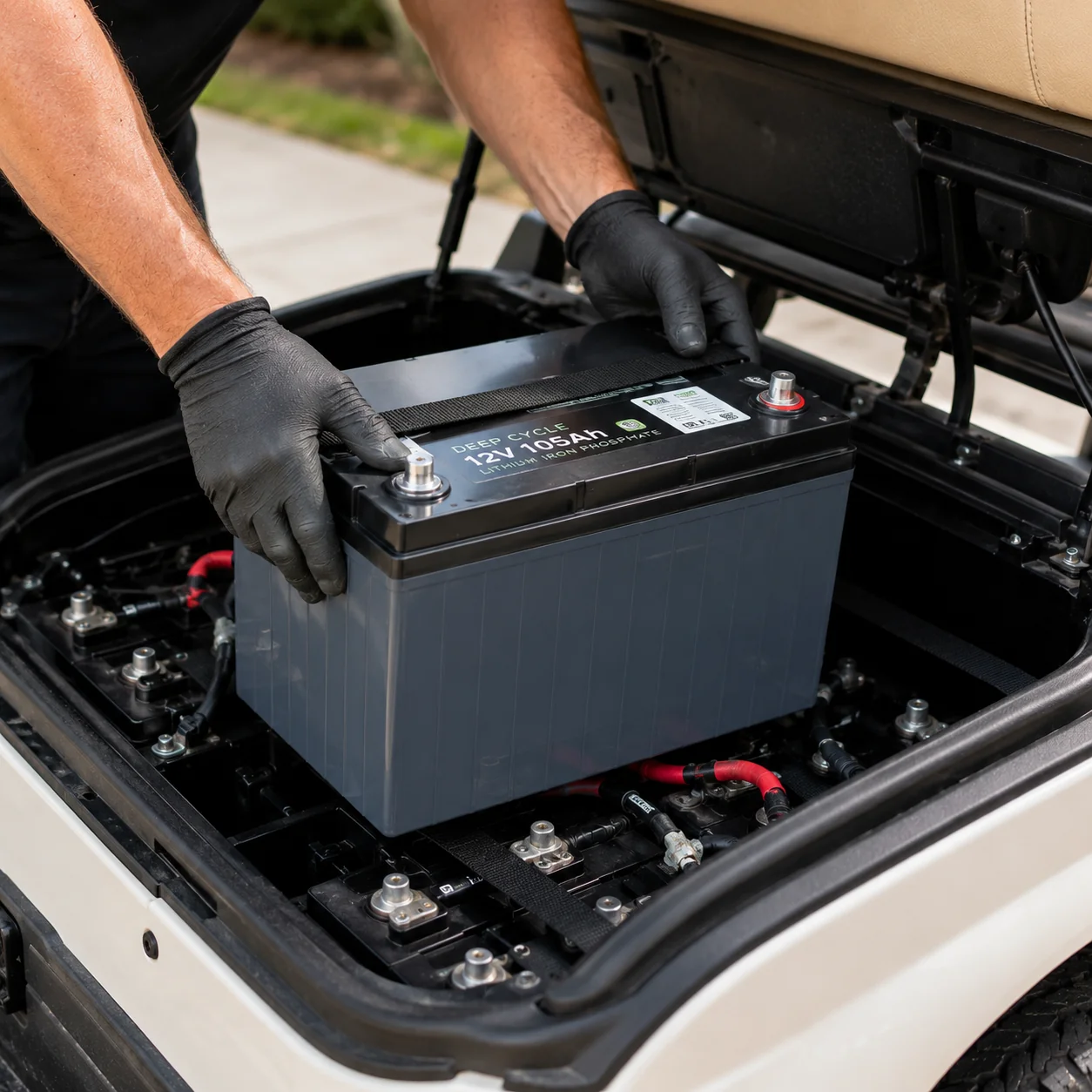
The most effective habit is charging after every use rather than waiting until the battery is nearly dead, because shallow discharge cycles cause far less wear than deep ones. Keep flooded lead-acid cells topped with distilled water every four to six weeks, and inspect terminals for corrosion at the same time. Store the cart in a shaded or climate-controlled space whenever possible, especially during the hottest summer months. When performance noticeably drops, such as reduced range, slow acceleration, or a charger that finishes unusually quickly, those are early signals that a professional battery evaluation is worth scheduling before a full failure leaves you stranded.
Related Guides
Next: Signs Your Golf Cart Battery Needs Replacing — Not Just a Recharge
Frequently Asked Questions
How do I know if my golf cart battery needs to be replaced rather than just serviced?
The clearest signs are a significant drop in driving range, the cart struggling on inclines it once handled easily, or a battery that reaches full charge much faster than it used to. A technician can load-test each individual cell to confirm whether the pack is recoverable or due for replacement.
Can I replace just one or two bad batteries in my pack instead of all of them?
It is generally not recommended. Mixing old and new batteries in a series pack causes the new cells to carry a disproportionate load, which shortens their life and can damage the entire set. Replacing the full pack at once gives you consistent performance and the best return on the investment.
Is it worth upgrading from lead-acid to lithium when my current batteries wear out?
For most daily drivers in a warm community, yes. Lithium batteries last roughly twice as long, weigh significantly less which improves range and reduces wear on the cart, and require almost no maintenance. The higher upfront cost is typically recovered over the life of the pack.
How often should I add water to my lead-acid golf cart batteries?
Check water levels every four to six weeks under normal use, and always check after a full charge cycle since that is when levels are easiest to read accurately. Use only distilled water and fill to just above the plates, never above the fill line, to avoid overflow during charging.
Does leaving my golf cart plugged in all the time damage the batteries?
With a modern automatic smart charger that shuts off at full charge, leaving the cart plugged in is generally fine and actually helps maintain charge between uses. Older or non-automatic chargers can overcharge and damage cells, so upgrading to a smart charger is worthwhile if yours is more than several years old.
How much does golf cart battery replacement typically cost?
Cost varies based on battery type, voltage configuration, and the number of batteries in the pack. Lead-acid replacements are less expensive upfront while lithium packs carry a higher initial cost but a longer service life. A local technician can give you an accurate quote once they assess your specific cart and battery setup.