Golf Cart Tire Types: Tubed vs. Tubeless Explained
Most golf carts in communities like The Villages run on tubeless tires, and for good reason: they hold air longer, are easier to repair on the spot, and handle slow leaks more forgiving than tubed designs. That said, older carts and certain off-path terrain situations still use tubed tires, and knowing which type you have changes how a flat gets fixed and what it costs. Understanding the difference helps you make smarter decisions before a breakdown catches you off guard. Learn more about Golf Cart Tire Repair.
What Makes a Tire Tubed or Tubeless
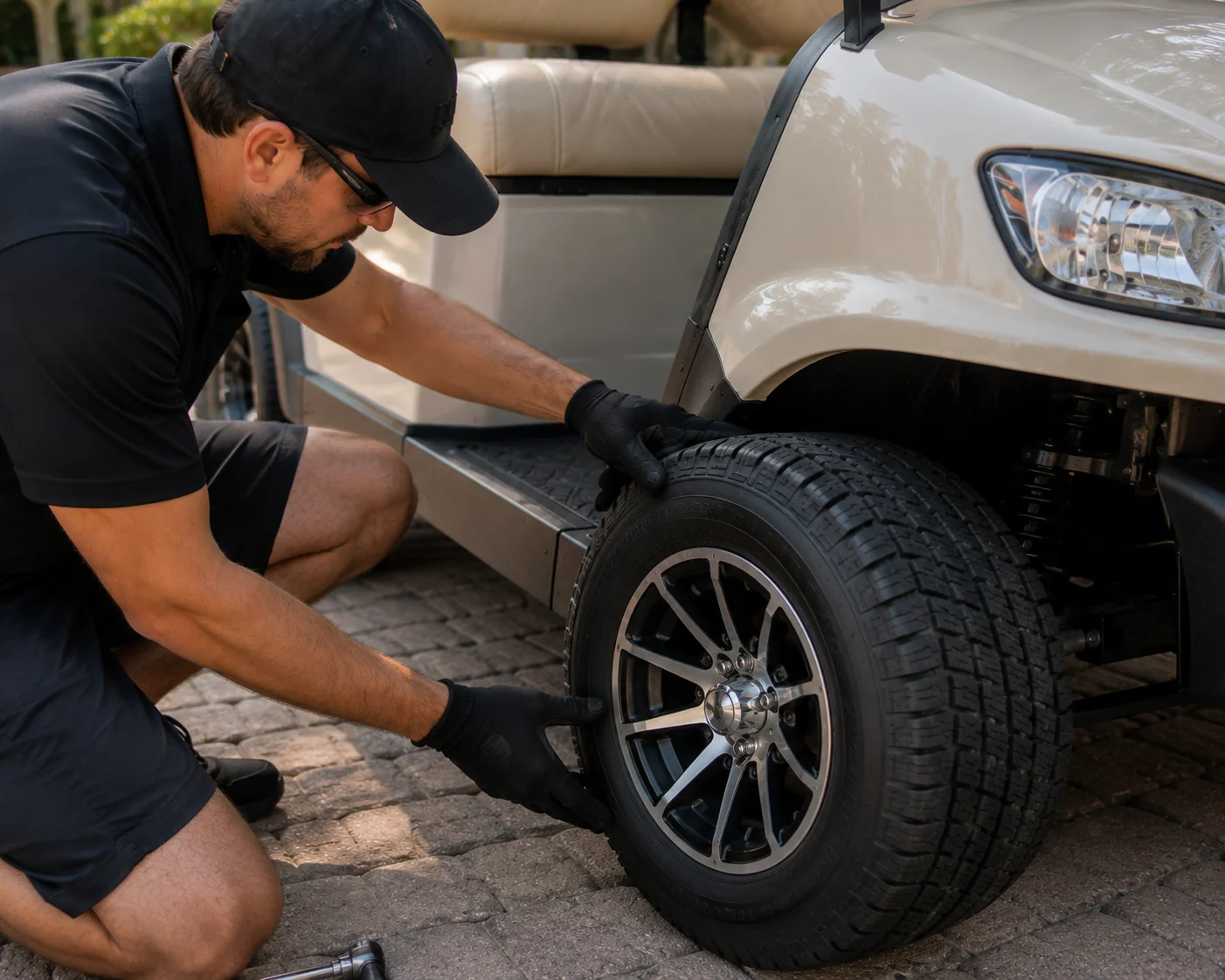
A tubed tire relies on a separate inner rubber tube that holds the pressurized air inside the tire casing. If the tube is punctured, the tire goes flat quickly and the tube itself must be patched or replaced as a separate component. A tubeless tire, by contrast, forms an airtight seal directly between the tire bead and the wheel rim, so the tire itself contains the air with no inner tube involved. Most golf carts manufactured in the last two decades, including popular Club Car, Yamaha, and EZ-GO models, come factory-equipped with tubeless tires mounted on sealed alloy or steel rims.
How Each Type Handles Punctures and Repairs
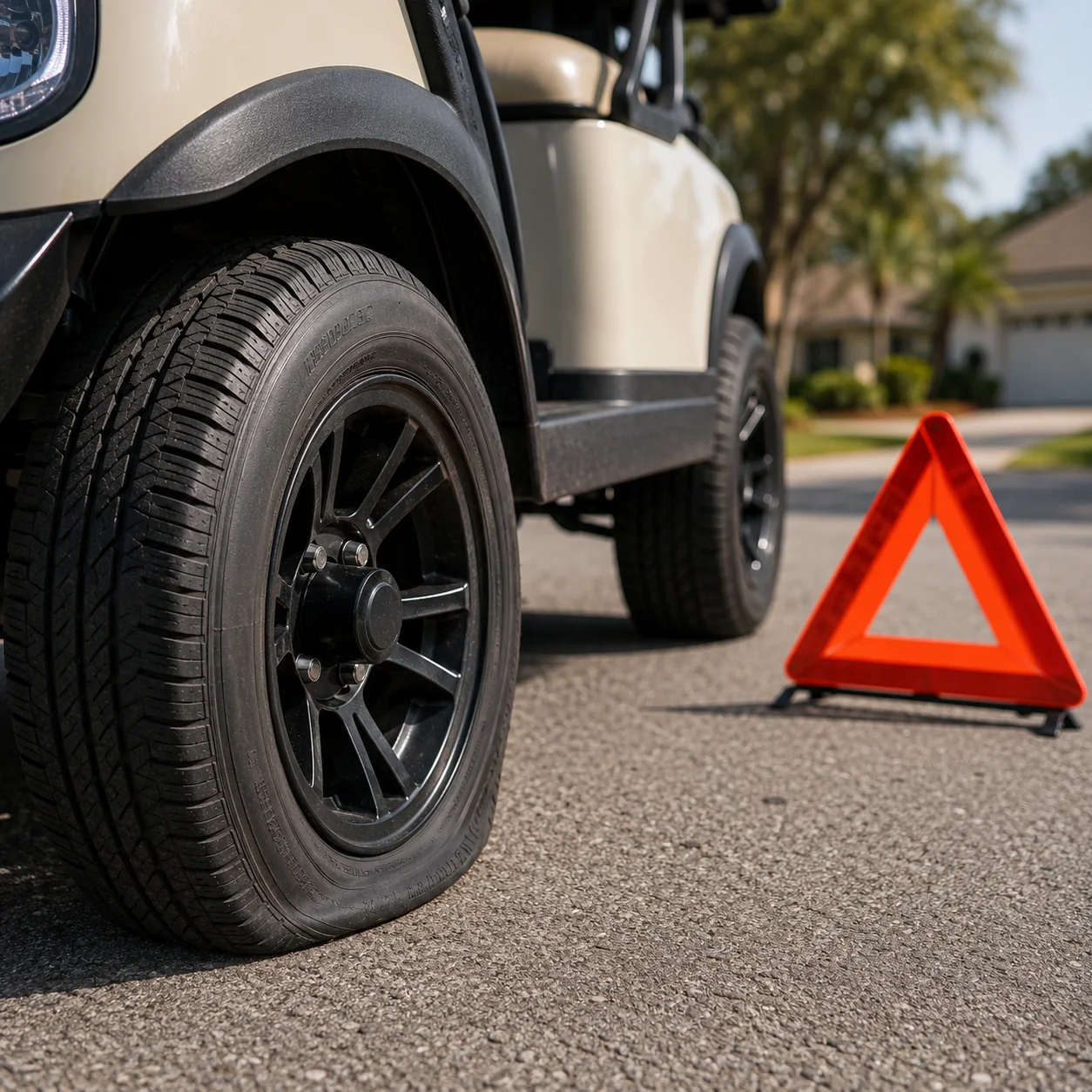
Tubeless tires have a meaningful advantage when it comes to punctures. A nail or screw that penetrates the tread often causes a slow, gradual leak rather than an immediate blowout, giving you time to notice the problem and get help before the tire is completely flat. A plug-and-patch repair can frequently be done roadside or in a driveway without removing the tire from the rim, which keeps repair costs low and downtime short.
Tubed tires behave differently. Even a small puncture can cause rapid deflation because air escapes freely once the inner tube is breached. Repairing a tubed tire requires dismounting the tire from the rim, locating and patching or replacing the tube, and then remounting and rebalancing everything. The labor involved is greater, and if the tube has aged and become brittle, replacement is often the smarter call rather than patching.
- Tubeless slow leaks are easier to catch before a full flat occurs
- Plug repairs on tubeless tires are faster and less expensive
- Tubed tire repairs require full dismounting and tube access
- Old or cracked tubes should be replaced rather than patched
Key Factors to Compare Before Choosing or Replacing
These six factors cover what most cart owners in active retirement and resort communities actually care about when deciding between tire types.
Repair Speed:
Tubeless tires can often be plugged in minutes without removing the wheel. Tubed tires require dismounting the tire and accessing the inner tube, adding significant time.
Cost to Repair:
A tubeless plug repair is typically the least expensive fix available. Tubed tire repairs cost more in labor, and tube replacement adds a parts cost on top.
Flat Behavior:
Tubeless tires usually lose air slowly after a puncture, giving you a warning window. Tubed tires can go flat rapidly, which is harder on rims and more disruptive.
Terrain Suitability:
Paved paths and cart trails common in communities like The Villages favor tubeless tires. Rougher off-path terrain with sharp debris can stress either type but demands faster tubeless repairs.
Rim Compatibility:
Tubeless tires require sealed rims with no spoke holes or air gaps. If your cart has older spoked or unsealed rims, a tube is necessary to hold air regardless of tire preference.
Long-Term Maintenance:
Tubeless setups generally require less ongoing attention. Tubed tires can develop slow leaks at the valve stem or from tube aging, requiring periodic inspection even without a puncture event.
Which Type Is Right for Your Cart and How You Use It
For the vast majority of golf cart owners using their carts on paved community roads, neighborhood paths, and golf courses, tubeless tires are the practical choice and almost certainly what your cart already has. They are simpler to maintain, cheaper to repair when something goes wrong, and better suited to the kind of slow-speed, frequent-stop driving that defines daily life in a place like The Villages. If you own an older cart with spoked rims or you have converted your cart for light off-road use on unpaved surfaces, tubes may be part of your setup by necessity, and a technician familiar with your specific rim type should inspect the tube condition regularly since rubber degrades over time even without a puncture.
Related Guides
Next: Warning Signs Your Golf Cart Tires Need Repair or Replacement
Frequently Asked Questions
How do I know if my golf cart tires are tubed or tubeless?
Check the sidewall of the tire for the word 'tubeless' molded into the rubber, which most modern tires display. You can also look at your rims: sealed, smooth-edged rims without spoke holes indicate a tubeless setup, while older spoked or vented rims typically require a tube to hold air.
Can I convert my golf cart from tubed to tubeless tires?
Conversion is possible but depends entirely on your rims. If your current rims are sealed and meet the bead seat requirements for tubeless mounting, a tire swap may be straightforward. If your rims have spoke holes or are not airtight, you would need to replace the rims as well, which increases the cost significantly.
Is it safe to plug a tubeless golf cart tire rather than replace it?
A proper plug-and-patch repair done by a technician is generally safe for tread-area punctures on tubeless tires, as long as the puncture is not too large and the tire has not been driven flat for any distance. Sidewall punctures or tires that have been run flat are typically not candidates for plugging and should be replaced.
Why does my golf cart tire keep losing air even without a visible puncture?
Slow air loss without an obvious puncture is often caused by a leaking valve stem, a compromised bead seal between the tire and rim, or a cracked inner tube in tubed setups. Corrosion on the rim bead seat is also a common culprit in humid climates and can usually be cleaned and resealed without replacing the tire.
How long do golf cart tires typically last before needing replacement?
With normal community use, golf cart tires commonly last four to six years, though UV exposure, heat, and infrequent use can accelerate sidewall cracking even when tread depth looks acceptable. Inspect the sidewalls annually for cracking or dry rot, especially if the cart sits outdoors in direct sun.
What tire pressure should I run in my golf cart tires?
Most golf cart tires are designed to run between 15 and 25 PSI, but the correct pressure is printed on the tire sidewall and should always take priority over general guidelines. Running tires underinflated causes premature wear and increases the risk of bead separation, while overinflation reduces traction and makes the ride harsher on paved surfaces.