Golf Cart Charger Troubleshooting: Fuses, Reset Buttons, and When to Call a Pro
If your golf cart charger is not working, start by checking the fuse and pressing the reset button before assuming the unit is dead. Most charger failures trace back to a blown fuse, a tripped thermal reset, or a loose connection — all of which you can inspect in minutes without special tools. When those quick checks come up empty, the problem usually lives inside the charger itself and needs a professional diagnosis. Learn more about Golf Cart Charger Repair.
Start Here: Check the Fuse First
The fuse is the first thing to inspect when a charger shows no signs of life. On most Club Car, EZ-GO, and Yamaha chargers, the fuse is housed in a small inline holder along the DC output cord or inside a panel on the charger body itself. Pull the fuse out, hold it up to light, and look for a broken filament or dark discoloration. A blown fuse costs almost nothing to replace, but if the new fuse blows immediately, a deeper fault in the charger or the cart's battery pack is forcing excess current through the circuit and you should stop and call a technician.
How to Use the Charger Reset Button
Many golf cart chargers include a thermal reset button that trips automatically when the unit overheats or experiences a voltage spike. The button is typically a small rubber or plastic protrusion on the back or underside of the charger housing. Allow the charger to cool for at least fifteen minutes, then press the button firmly until you feel or hear a click. Plug the charger back in and watch for the indicator light to confirm it has resumed a charge cycle.
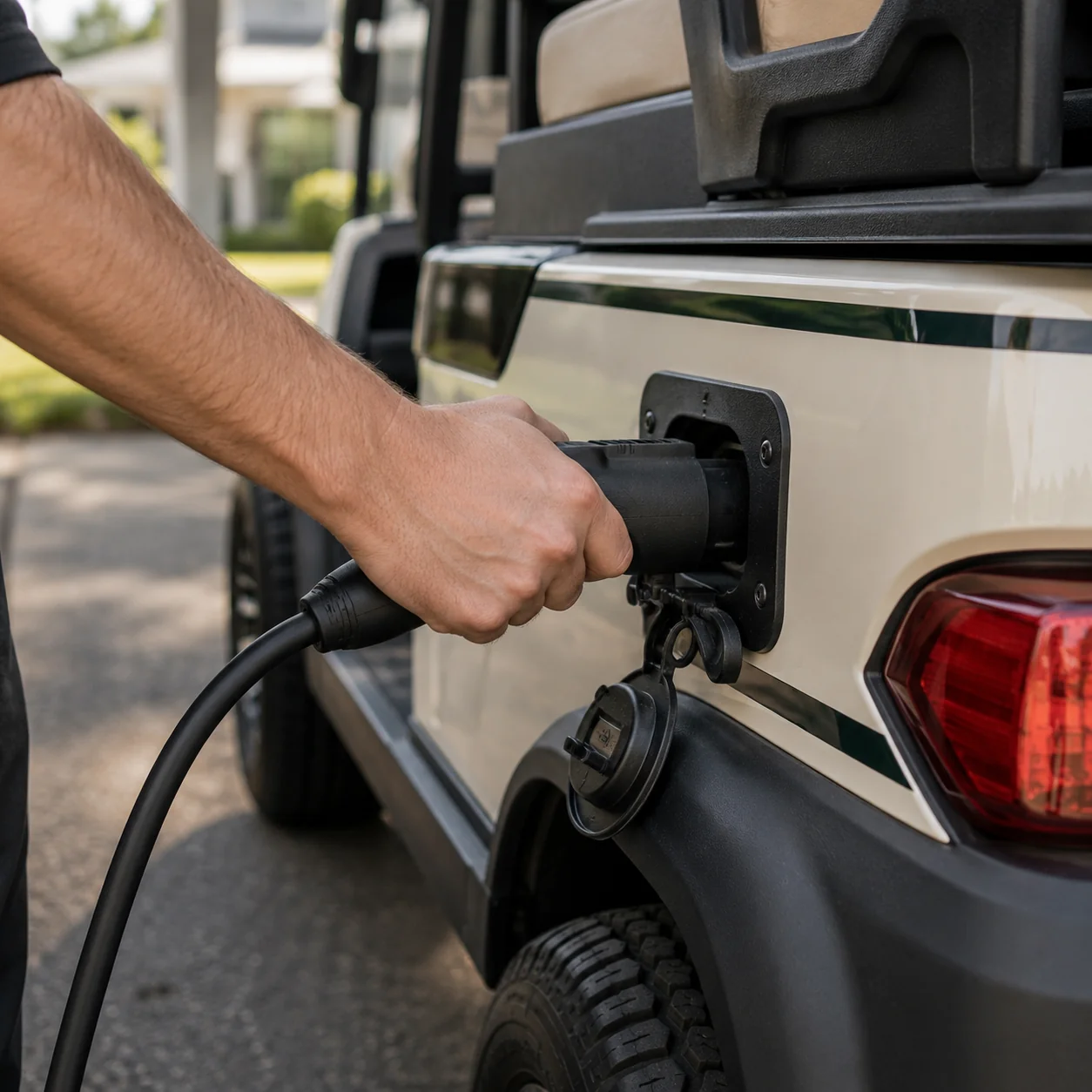
If the charger still does not respond after a reset, check that the AC outlet is live by plugging in a lamp or phone charger. Also inspect the DC plug that connects to the cart for bent pins, corrosion, or melted plastic, any of which can interrupt the circuit before power ever reaches the batteries.
- Let the charger cool completely before pressing reset
- Press firmly until you feel the button click into place
- Confirm the wall outlet is working with a separate device
- Inspect the DC plug for corrosion, bent pins, or heat damage
- Watch the indicator light for at least two minutes after reconnecting
Common Charger Symptoms and What They Usually Mean
Match what you are seeing to these common failure patterns to decide whether a DIY fix is realistic or a pro is needed.
No lights, no fan:
The charger is receiving no power or the internal fuse is blown. Check the outlet, the cord, and the fuse before anything else.
Charger clicks on then off:
Often caused by a battery pack that has dropped too low for the charger to recognize. A technician can manually bring the pack up to an acceptable voltage.
Charger runs but never finishes:
One or more batteries in the pack may be failing and pulling the overall voltage down. The charger keeps working because it never sees a full charge, pointing to a battery issue rather than a charger fault.
Charger gets very hot:
Some heat is normal, but excessive heat suggests a failing internal component or a shorted cell in the battery pack. Stop using the charger until it is inspected.
Indicator light stays red or flashes an error code:
Consult your owner's manual for the specific code. Persistent error codes after a reset typically indicate an internal board or transformer problem requiring professional repair.
Burning smell or visible scorch marks:
Discontinue use immediately. Scorch marks signal a component failure that poses a fire risk and the charger should not be used again until evaluated by a technician.
When the Problem Is Beyond a DIY Fix
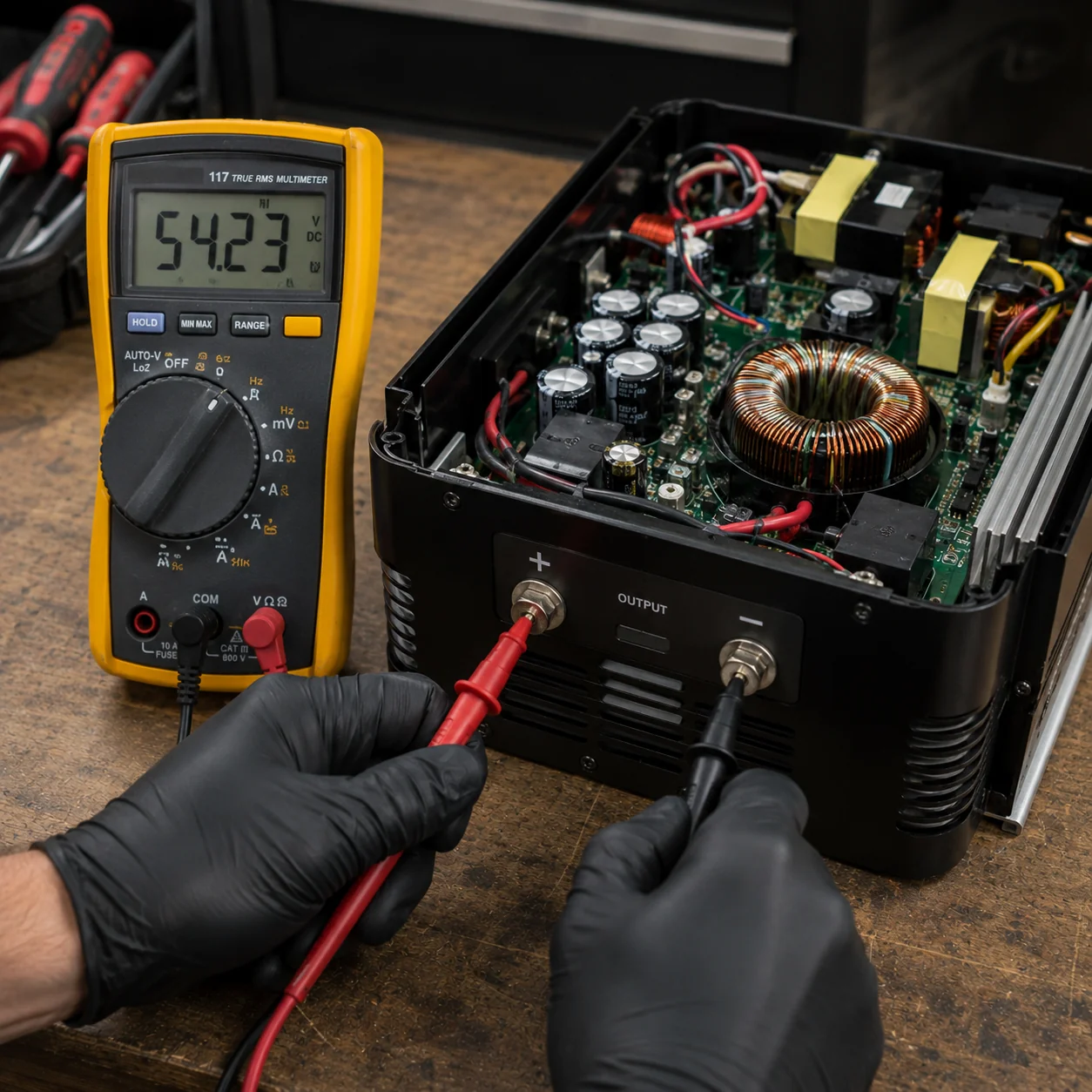
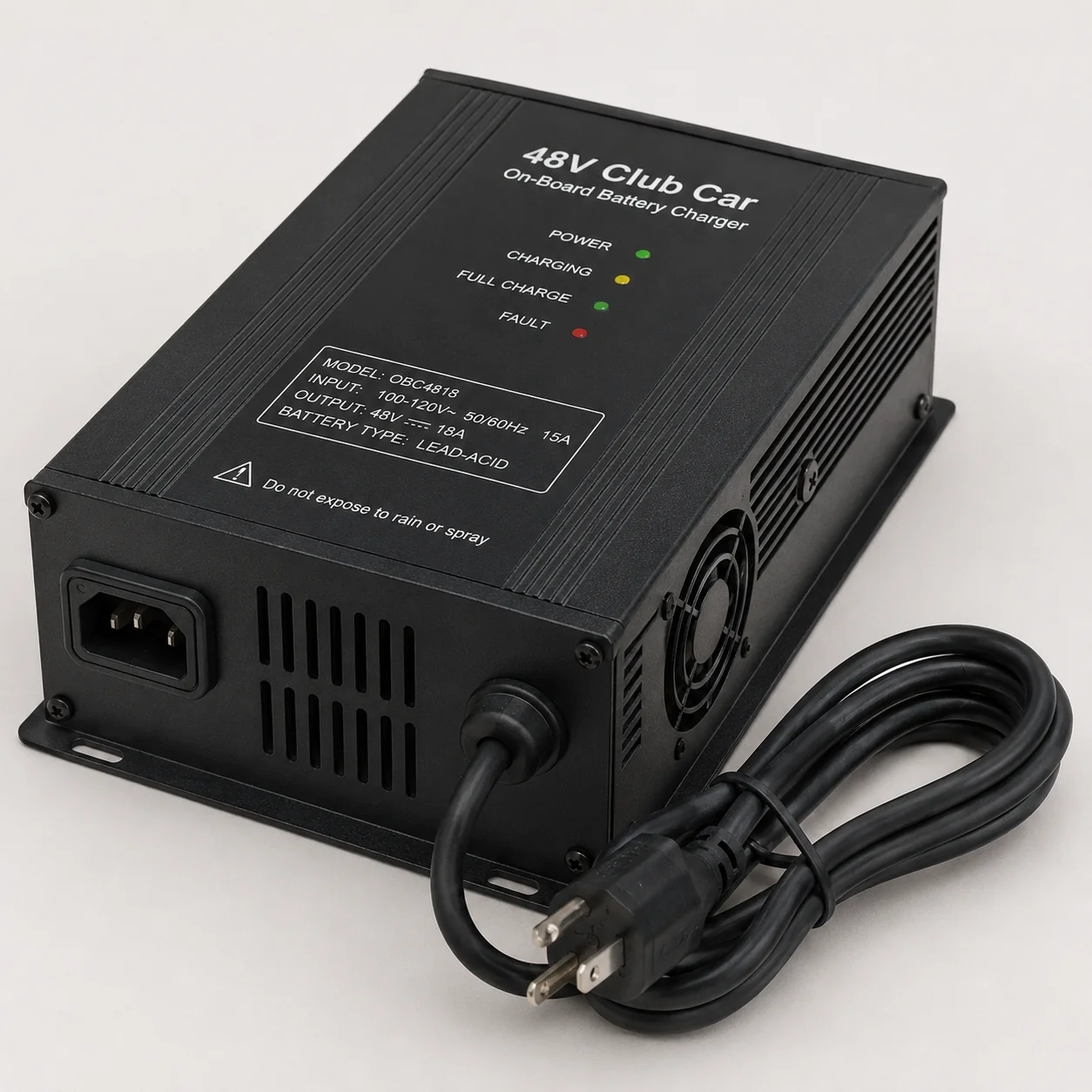
If the fuse is intact, the reset button does not help, and the outlet is confirmed live, the fault is almost certainly inside the charger housing. Internal components like the transformer, rectifier, control board, and capacitors require testing equipment and replacement parts that most cart owners do not have on hand. Attempting to open and probe a charger without proper training also carries a real shock risk because capacitors can hold a charge long after the unit is unplugged. At that point, scheduling a professional charger repair is the faster and safer path to getting back on the road.
Related Guides
Previous: Golf Cart Charger Maintenance Tips to Avoid Costly Repairs
Frequently Asked Questions
How do I know if my golf cart charger or my batteries are the problem?
Borrow or rent a known-good charger and connect it to your cart. If it charges normally, your original charger is faulty. If it also fails to complete a charge cycle, the battery pack is the likely culprit and should be tested with a load tester or voltmeter.
Can I replace a golf cart charger fuse myself?
Yes, replacing a fuse is a straightforward DIY task. Match the amperage rating printed on the old fuse exactly, and use the same fuse type. If the replacement fuse blows right away, stop and have a technician find the underlying short.
Why does my charger turn on but shut off after a few minutes?
This usually means the charger's thermal protection is tripping due to overheating, or the battery pack voltage is outside the range the charger expects. Let the unit cool, check for blocked ventilation around the charger, and have the battery pack tested if the problem repeats.
Is it safe to leave a golf cart charger plugged in overnight?
Modern automatic chargers are designed to taper off and stop drawing significant current once the pack is full, making overnight charging generally safe. However, a charger that is malfunctioning or overheating should never be left unattended.
How long should a golf cart charger last?
A quality charger typically lasts eight to fifteen years with normal use, though lifespan depends on how often the cart is used, whether the batteries are kept in good condition, and whether the charger is stored in a climate-controlled space. Frequent overheating shortens life significantly.
When does it make more sense to replace a charger than repair it?
If the repair estimate approaches half the cost of a new charger, or if the unit is more than ten years old and has had multiple issues, replacement is usually the better investment. A technician can give you a straight comparison after diagnosing the fault.