Club Car vs. Yamaha vs. EZ-GO: Easiest to Customize?
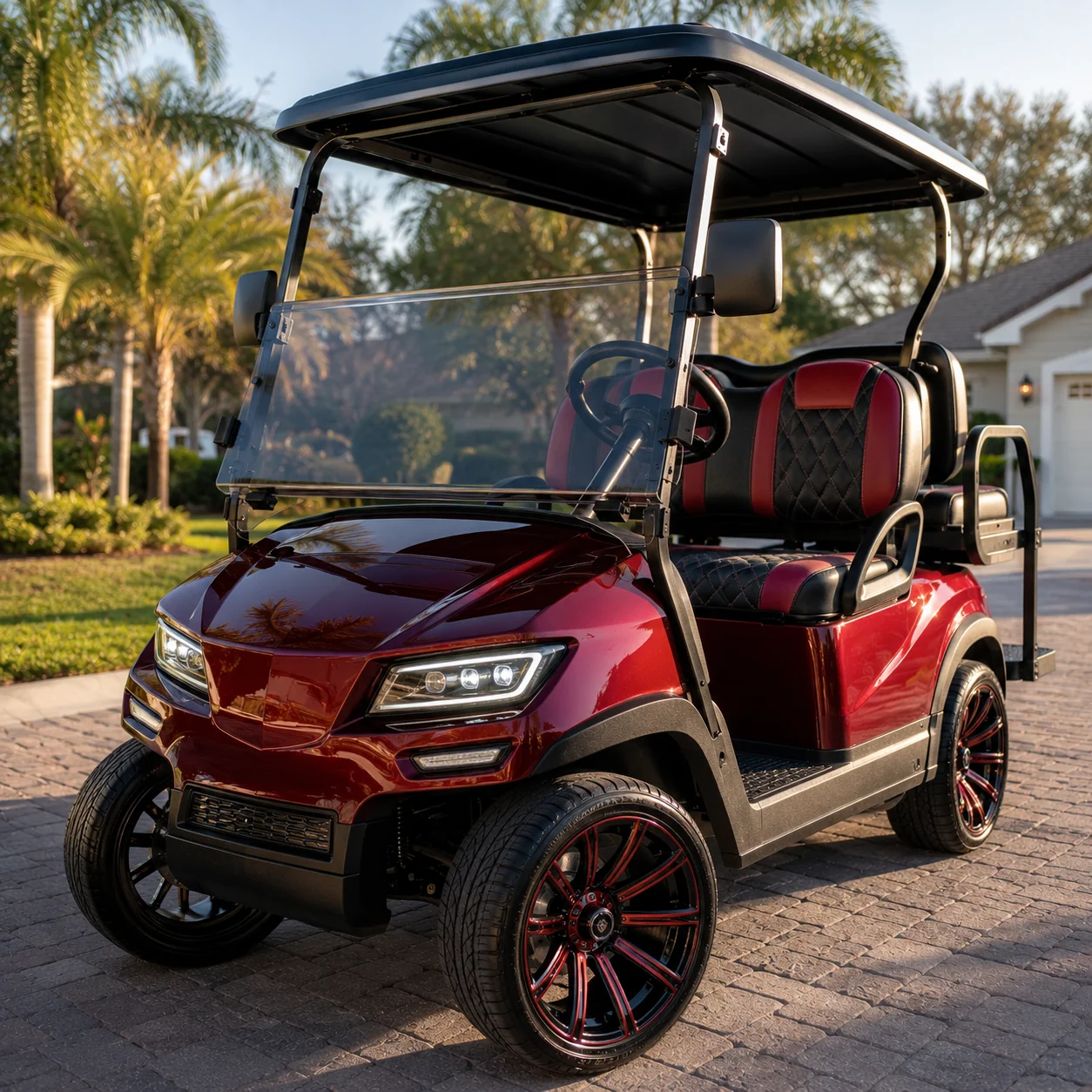
EZ-GO edges out the competition for sheer aftermarket depth, but Club Car and Yamaha are not far behind and each brand has distinct advantages depending on what you want to change. Parts availability, frame design, and the size of the third-party accessory market all vary enough to matter when you are planning a serious build. Understanding those differences before you buy — or before you invest in upgrades — saves time and money. Learn more about Customizing.
Why Brand Choice Shapes Your Customization Options
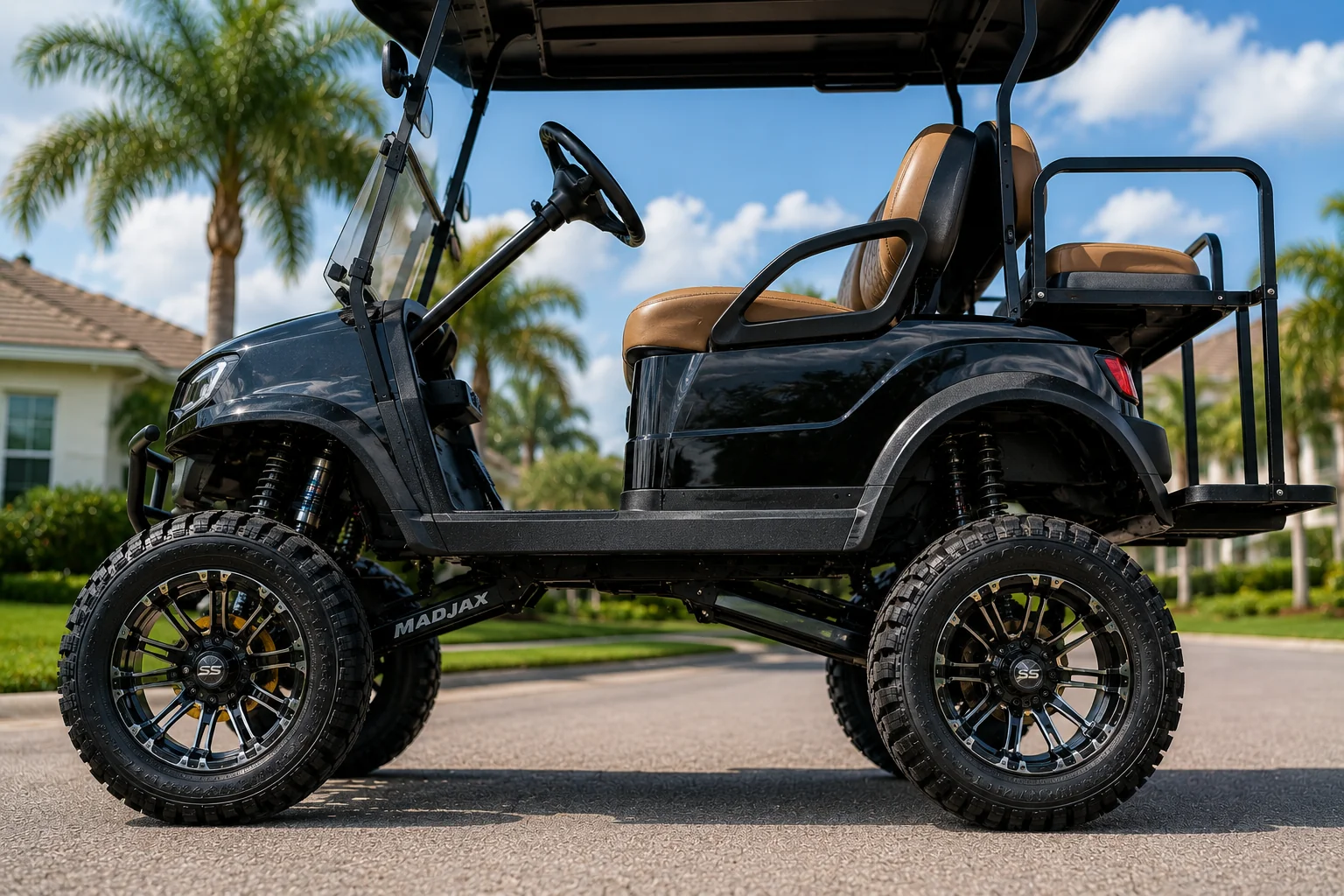
Golf cart customization covers a wide range, from simple lift kits and custom wheels to full motor swaps, custom bodies, and lithium battery conversions. The brand you own determines how many vendors compete for your business, how easy parts are to source locally, and whether a technician can work on your cart without ordering specialty components. In The Villages and surrounding communities, all three major brands are common, which means local shops carry parts for each — but the depth of that inventory is not equal across brands. EZ-GO has historically dominated fleet sales, which pushed manufacturers to develop the widest catalog of compatible aftermarket parts for it.
EZ-GO: The Aftermarket Leader
EZ-GO's popularity in fleet and resort settings created a large installed base, and the aftermarket followed. Lift kits, custom body panels, rear seat kits, light bars, and performance motor upgrades are all widely available from multiple vendors, which keeps prices competitive. The RXV and TXT platforms have been in production long enough that fitment guides are well established, reducing the guesswork when ordering parts.
One practical advantage is that EZ-GO's frame geometry is familiar to most independent technicians. If you want a custom build done by a local shop rather than a dealer, you are more likely to find someone who has done it before. The main limitation is that EZ-GO's stock suspension is considered less refined than Club Car's, so owners chasing a smoother ride sometimes need to budget for suspension upgrades alongside other modifications.
- Widest selection of third-party body kits and custom enclosures
- Strong lithium battery conversion support across multiple vendors
- Lift kits available at multiple price points from budget to premium
- Large online community with documented build guides
Brand-by-Brand Customization Snapshot
Here is how the three brands compare across the factors that matter most to someone planning upgrades.
EZ-GO — Parts Availability:
The deepest aftermarket catalog of the three brands. Multiple vendors compete on price, and most lift and body kits are designed with EZ-GO fitment first.
Club Car — Build Quality Base:
Aluminum frame resists rust and provides a solid foundation for heavy modifications like lifted suspensions and oversized tires without flex issues.
Yamaha — Engine Reliability:
Gas Yamaha carts are known for engine longevity, which makes them a strong base for performance-oriented builds where the drivetrain is kept stock.
Club Car — Aftermarket Depth:
Second only to EZ-GO in parts availability. The Precedent and Onward platforms have strong vendor support, especially for suspension and wheel upgrades.
Yamaha — Customization Flexibility:
Slightly narrower aftermarket than the other two, but growing. Yamaha owners sometimes need to confirm fitment more carefully before ordering third-party parts.
All Brands — Lithium Conversion:
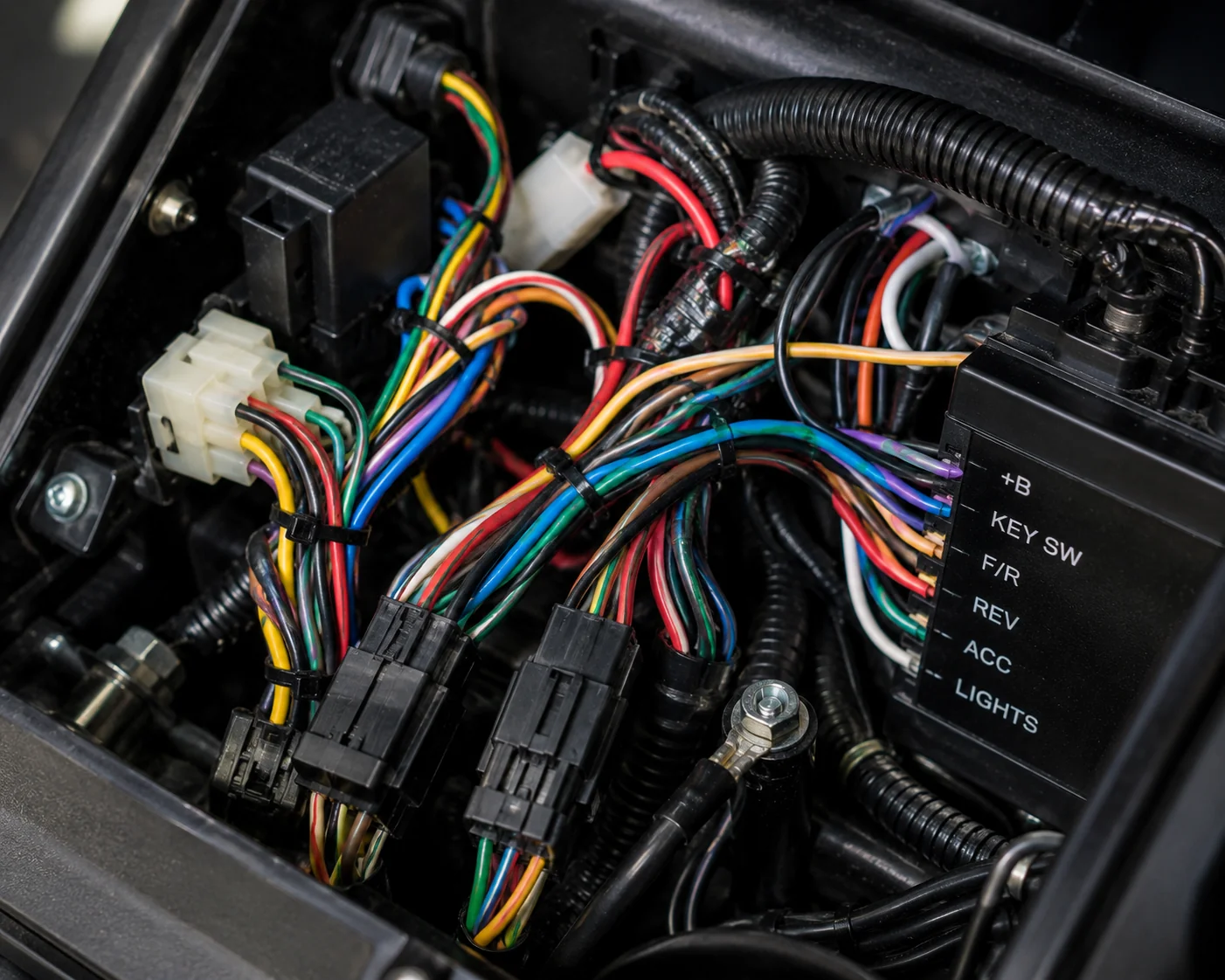
Lithium battery kits are now available for Club Car, EZ-GO, and Yamaha electric models, though wiring harness compatibility should be verified by a technician before purchase.
Club Car and Yamaha: Where They Pull Ahead
Club Car's aluminum frame is a genuine differentiator for owners who want a lifted cart with large tires. Steel-frame carts can develop flex over time under the added stress of a lift and heavier wheels, while aluminum holds its geometry better. That structural advantage makes Club Car a favorite among owners planning aggressive builds. Yamaha competes differently — its gas engines have a strong reputation for reliability, and owners who want a performance-tuned gas cart often start with a Yamaha because the engine itself requires less remediation work before modifications begin. For straightforward cosmetic upgrades like custom seats, steering wheels, and light packages, all three brands are close to equal because most of those accessories use universal mounting systems.
Related Guides
Previous: How Much Does It Cost to Customize a Golf Cart? | Next: Street-Legal Golf Cart Requirements in Florida: What Customizations Are Allowed?
Frequently Asked Questions
Can I put aftermarket wheels on any brand of golf cart?
Most aftermarket wheels use a 4×4 bolt pattern that fits EZ-GO, Club Car, and Yamaha carts, but you should confirm the offset and hub bore before ordering. A technician can verify fitment quickly and flag whether a lift kit is needed to clear larger tire sizes.
Is it harder to find a technician who works on Yamaha carts?
Yamaha is less common than EZ-GO and Club Car in some markets, but in communities where all three brands are widely used, most experienced technicians are comfortable with Yamaha. It is worth asking a shop directly whether they stock Yamaha-specific parts or order them as needed.
Does converting to lithium batteries void my cart's warranty?
It can, depending on the manufacturer and the age of the cart. If your cart is still under warranty, check the terms before converting. For out-of-warranty carts, lithium conversions are straightforward and a qualified technician can ensure the charging system is compatible.
Which brand holds its resale value better after customization?
Resale value after customization depends more on the quality of the work and the appeal of the specific upgrades than on brand alone. Professionally installed lifts, name-brand wheels, and lithium batteries tend to add value across all three brands, while purely cosmetic changes have mixed results.
Can a gas cart be converted to electric for easier customization?
Gas-to-electric conversions are possible but involve significant cost and complexity, including motor, controller, battery pack, and wiring changes. For most owners, it is more practical to start with an electric model if an electric build is the goal.
How do I know if a lift kit is compatible with my specific cart model?
Lift kit compatibility depends on the model year and platform, not just the brand. A technician familiar with your cart can cross-reference the part number and confirm fitment before you purchase, which avoids the cost of returning incompatible parts.