Street-Legal Golf Cart Rules in Florida: What's Allowed?
In Florida, a golf cart can legally travel on roads posted at 30 mph or less once it meets the state's Low-Speed Vehicle requirements — and The Villages has its own layer of community rules on top of that. The short answer is that several modifications are not just allowed but required, while others, like certain speed upgrades, come with restrictions you need to understand before you build. Knowing exactly what the law demands helps you customize confidently and avoid a failed inspection or a fine. Learn more about Customizing.
Florida's Low-Speed Vehicle Standard Explained
Florida Statute 316.2122 defines a Low-Speed Vehicle as a four-wheeled motor vehicle with a top speed between 20 and 25 mph. To qualify, your cart must carry a valid title and registration, display a slow-moving vehicle emblem, and be equipped with a specific set of safety features. Stock golf carts sold for course use rarely meet all of these requirements out of the box, which is why most owners in street-legal communities need at least some level of modification before they can legally leave their driveway.
Required Safety Features for Street-Legal Operation
Florida law specifies six categories of equipment that must be present and functional before a golf cart can be registered as an LSV.
Headlights and Taillights:
Front headlights and rear taillights must be operational for low-light and nighttime driving. Many stock carts have decorative lights that do not meet the brightness standard.
Turn Signals:
Front and rear turn signals are mandatory. A proper wiring harness and signal switch must be installed if the cart did not come with them from the factory.
Mirrors:
A rearview mirror and at least one side mirror are required. Mirrors must provide a clear view of traffic behind the vehicle.
Seat Belts:
Every designated seating position must have a working seat belt. This is one of the most commonly overlooked requirements during a DIY build.
Windshield:
A windshield made of safety glass or approved plastic is required. Folding windshields that can be locked in the upright position generally satisfy this rule.
Horn and Reflectors:
A working horn and reflective devices on the front and rear round out the required equipment list. Both are inexpensive additions that are easy to overlook.
Speed Upgrades: What the Rules Actually Say
Speed modifications are where many cart owners run into trouble. An LSV is legally capped at 25 mph, so upgrading a cart to exceed that threshold changes its classification under Florida law. A vehicle capable of speeds above 25 mph is no longer an LSV — it becomes a motorcycle or low-speed vehicle variant that requires a different registration category, different insurance, and in some cases a VIN inspection. In The Villages, community rules add another layer: the internal road network is designed around the LSV speed range, and carts clocked above posted limits can be cited by district security.
That said, a modest performance upgrade that keeps top speed at or just under 25 mph is generally permissible and popular. Upgrading to a higher-voltage battery system, installing a high-torque motor, or reprogramming a controller for better hill-climbing power can all be done without pushing the cart past the legal ceiling. The key is having a technician verify the actual top speed after any drivetrain work so you know exactly where you stand before you register the vehicle.
Cosmetic and Comfort Customizations
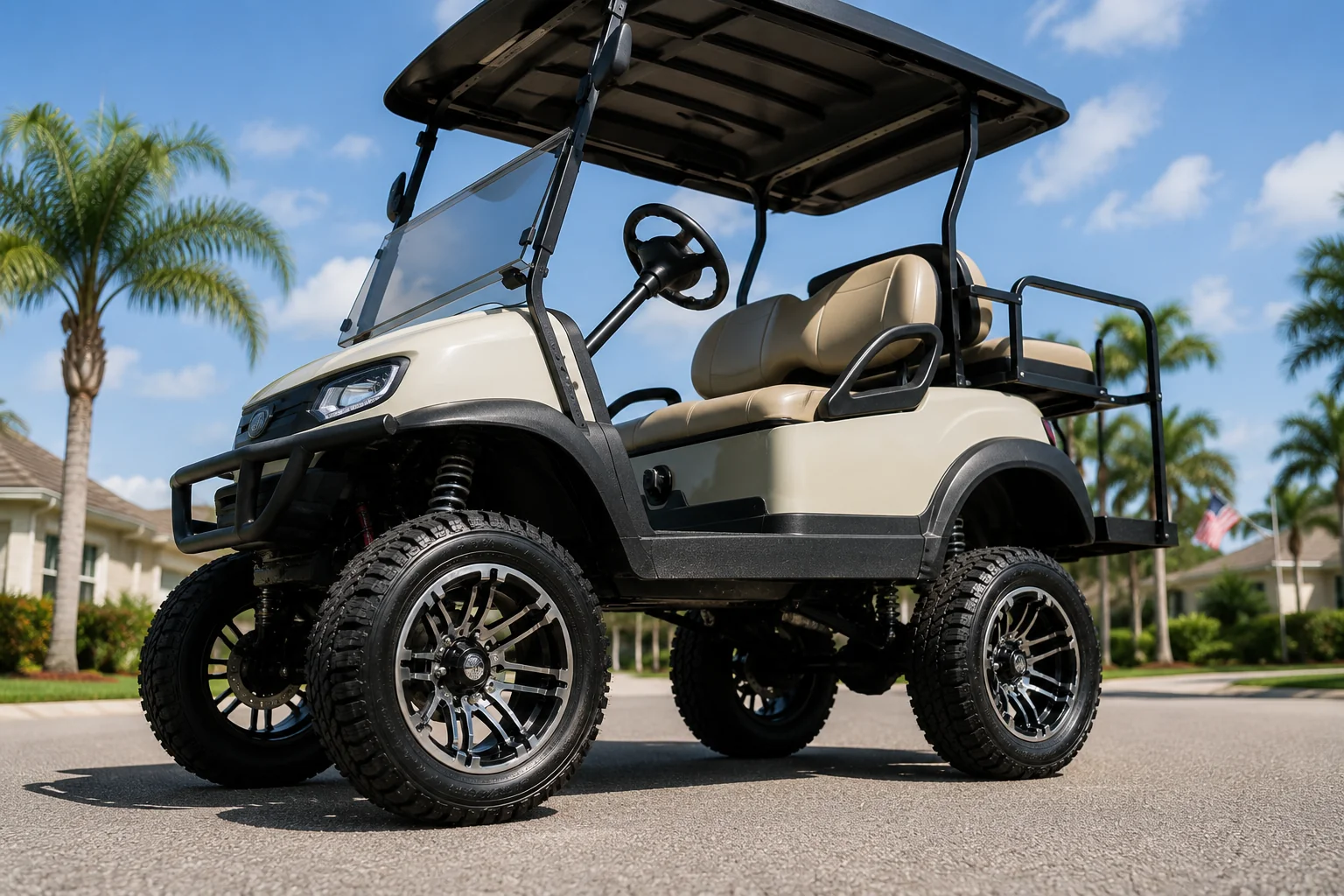
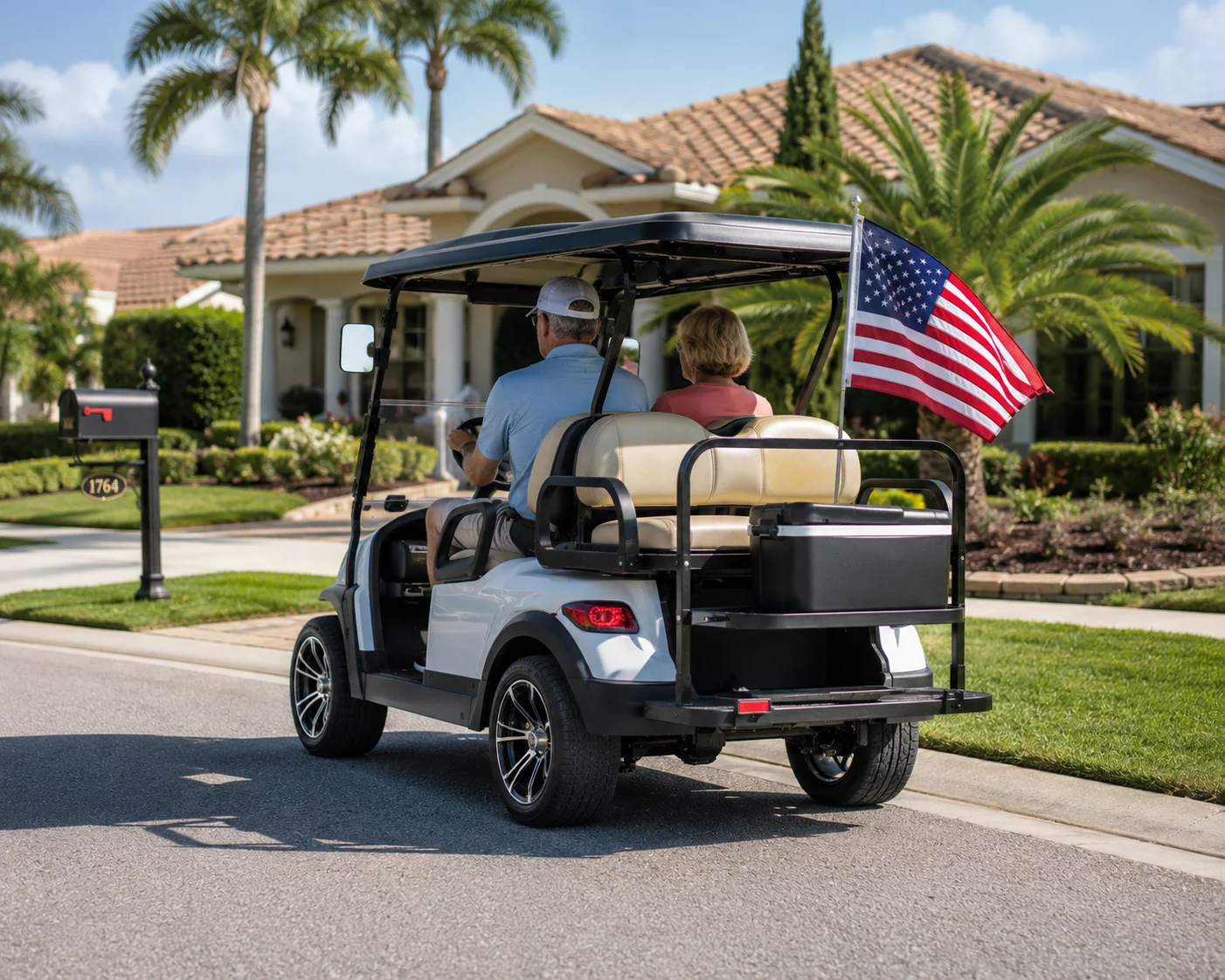
Beyond the legal requirements, a wide range of cosmetic and comfort upgrades are unrestricted and popular among residents who use their carts daily. Custom paint, lifted suspensions with larger tires, upgraded seating, stereo systems, weather enclosures, and decorative lighting all fall into this category. The main caution with lifted kits and oversized tires is that they can affect handling and may require a steering or alignment adjustment to keep the cart safe at road speeds. Working with a shop familiar with both the mechanical side and the local registration process means your finished cart looks the way you want and passes inspection the first time.
Related Guides
Previous: Club Car vs. Yamaha vs. EZ-GO: Which Golf Cart Is Easiest to Customize? | Next: Golf Cart Customization vs. Modification: What's the Difference and Why It Matters
Frequently Asked Questions
Do I need a driver's license to operate a street-legal golf cart in The Villages?
Yes. Florida law requires a valid driver's license to operate a registered Low-Speed Vehicle on public roads. The Villages also enforces this rule on its internal road network, so unlicensed drivers are restricted to private property.
Can I drive my street-legal cart on US-27 or US-441?
No. LSVs are restricted to roads with a posted speed limit of 30 mph or less. Major state highways and arterial roads are off-limits regardless of how well-equipped your cart is.
How do I register a golf cart as an LSV in Florida?
You apply through the Florida Department of Highway Safety and Motor Vehicles, the same agency that handles car registrations. You will need proof of insurance, a completed title application, and documentation that the cart meets all LSV equipment requirements. Some counties require a physical inspection before issuing the title.
What kind of insurance does a street-legal golf cart require?
Florida requires LSVs to carry personal injury protection and property damage liability coverage, the same minimums required for passenger cars. Standard golf cart insurance policies typically do not meet this threshold, so confirm with your insurer that you have a policy written specifically for an LSV.
Will adding a lift kit affect my cart's street-legal status?
A lift kit itself does not disqualify a cart from LSV status, but it can affect handling, braking distance, and tire clearance in ways that create safety issues. A technician should inspect the steering geometry and brake performance after any lift installation to make sure the cart still operates safely at road speeds.
Can a repair shop handle both the mechanical upgrades and the registration paperwork?
Most shops handle the mechanical side and can advise you on exactly which components are needed to meet the legal checklist. Registration itself is processed through the county tax collector's office, but a knowledgeable shop will send you there with everything already in order so the process goes smoothly.