
Lead-Acid vs. Lithium Golf Cart Batteries: Which to Choose
For most golf cart owners in active retirement communities, lithium-ion batteries offer the best long-term value despite a higher upfront price, while flooded lead-acid batteries remain a practical choice for budget-conscious buyers who don't mind routine maintenance. AGM batteries split the difference, offering a sealed, low-maintenance design at a moderate cost. Understanding how each type performs in daily use will help you make the right call before your next battery replacement. Learn more about Golf Cart Battery Replacement.
The Three Battery Types Every Golf Cart Owner Should Know
Flooded lead-acid batteries are the traditional choice and the least expensive to purchase outright. They require regular water top-offs, produce small amounts of hydrogen gas during charging, and must be stored and charged upright. AGM, or absorbent glass mat, batteries are a sealed variation of lead-acid technology that eliminates the watering chore and handles vibration better, making them a popular upgrade for owners who want less hands-on upkeep. Lithium-ion batteries, typically using lithium iron phosphate chemistry, are the newest option and carry a premium price tag but deliver meaningful advantages in weight, lifespan, and consistent power output across the full charge cycle.
Upfront Cost vs. Total Cost of Ownership
Flooded lead-acid packs are the cheapest to buy, often costing roughly half to two-thirds less than a comparable lithium set. That gap looks attractive at the register, but lead-acid batteries typically need replacement every three to five years under regular use, and improper watering or a single deep discharge can shorten that window further. When you factor in two or three replacement cycles over a decade, the cumulative spend often exceeds what a single lithium pack would have cost.
Lithium batteries are commonly rated for eight to twelve years of service and can handle a much deeper discharge without permanent damage. They also charge faster, which matters when a cart is used multiple times in a day as is common in busy communities. AGM batteries fall between the two on both price and lifespan, usually lasting four to six years with no watering required, making them a reasonable middle path for owners who plan to sell or upgrade their cart within that window.
- Flooded lead-acid: lowest purchase price, highest maintenance, shortest lifespan
- AGM: moderate price, sealed design, no watering, mid-range lifespan
- Lithium-ion: highest purchase price, virtually no maintenance, longest lifespan
- Total cost of ownership often favors lithium for carts used daily or year-round
Side-by-Side Comparison: Key Buying Factors
Use these six factors to match battery type to your actual usage pattern and budget.
Weight:
A lithium pack can weigh 50 to 70 percent less than an equivalent lead-acid set. Less weight means better range, less stress on the frame, and easier handling if the batteries ever need to be removed.
Maintenance:
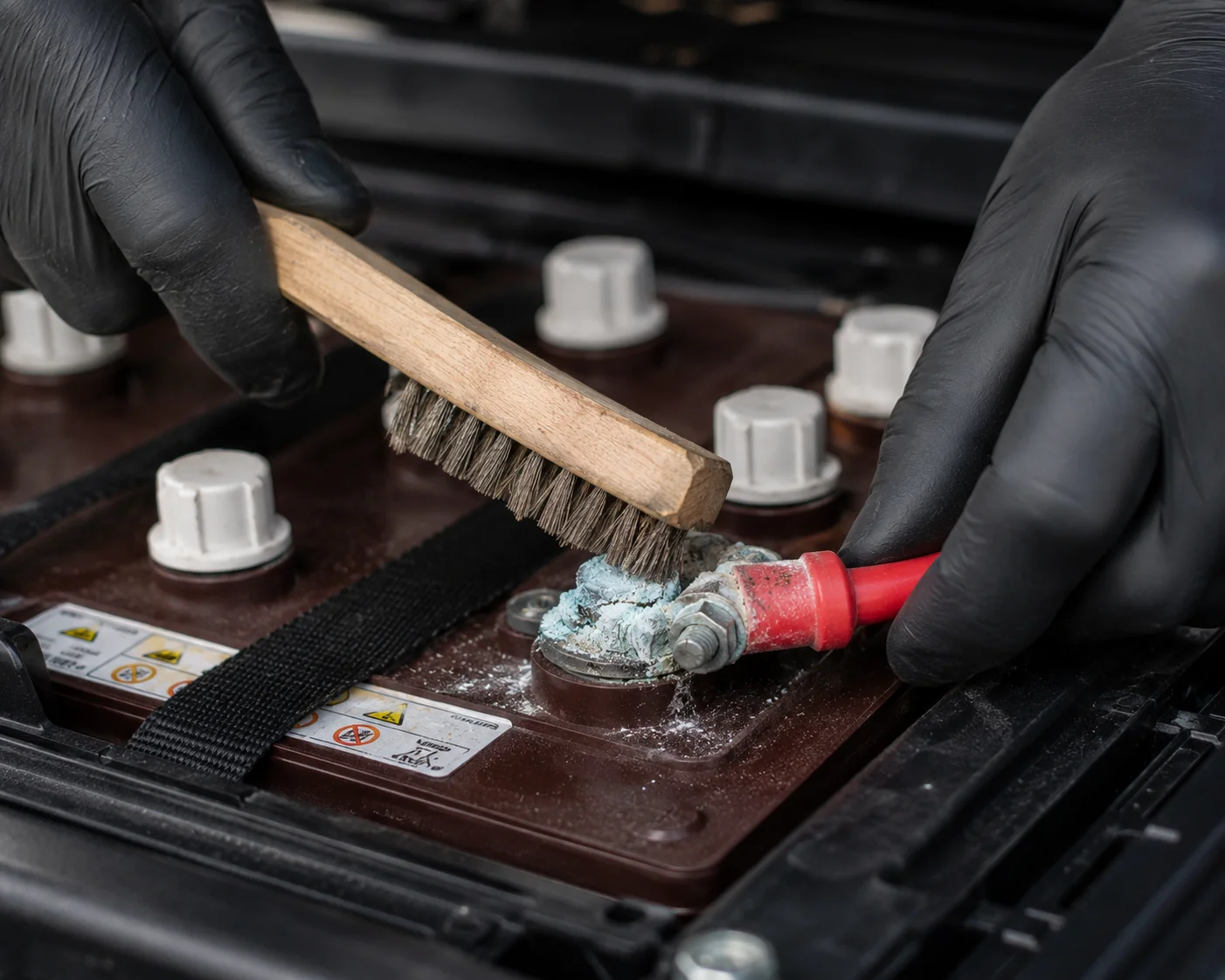
Flooded lead-acid cells need distilled water added every four to eight weeks. AGM and lithium batteries are essentially maintenance-free beyond keeping terminals clean.
Range Consistency:
Lead-acid voltage drops noticeably as the charge depletes, causing sluggish performance toward the end of a run. Lithium batteries hold voltage steady until nearly empty, so the cart feels the same on hole one as it does on hole eighteen.
Charge Time:
Lithium batteries typically reach a full charge in two to four hours. Lead-acid packs often need eight to ten hours, which can be inconvenient if the cart is used multiple times per day.
Safety and Storage:
Flooded batteries must be stored upright and in ventilated areas due to off-gassing. AGM and lithium are sealed and can be stored in more flexible orientations without venting concerns.
Compatibility:
Most carts from Club Car, Yamaha, and EZ-GO support all three battery types, but lithium conversions sometimes require a compatible charger and may need a battery management system. A qualified technician can confirm what your specific model supports.
Which Battery Makes the Most Sense for Retirement Community Use?
In communities where carts run daily for errands, social visits, and recreational rounds, lithium batteries tend to earn back their premium cost through longevity and reduced hassle. Owners who prefer a set-it-and-forget-it experience particularly appreciate not having to check water levels or worry about sulfation from sitting partially charged. For seasonal residents who use a cart only a few months per year and store it the rest of the time, a quality AGM battery can be a smart compromise, offering sealed convenience without the full lithium investment. Flooded lead-acid still makes sense for owners on a fixed budget who are comfortable with the maintenance routine and plan to replace the cart itself within a few years.
Related Guides
Previous: Signs Your Golf Cart Battery Needs Replacing — Not Just a Recharge | Next: Golf Cart Battery Maintenance Guide: Make Your Batteries Last Longer
Frequently Asked Questions
Can I switch from lead-acid to lithium without replacing my whole cart?
In most cases, yes. The physical swap is straightforward, but you will likely need a lithium-compatible charger since standard lead-acid chargers use a different charging profile that can damage lithium cells over time. A technician familiar with your cart's brand can confirm compatibility and handle the conversion correctly.
How often do golf cart batteries actually need to be replaced?
Flooded lead-acid batteries typically last three to five years with proper maintenance, AGM batteries four to six years, and lithium batteries eight to twelve years under normal use. Neglecting watering, leaving batteries deeply discharged for extended periods, or using an incompatible charger can shorten any battery's life significantly.
Is it worth paying more for lithium if I only use my cart occasionally?
Lithium batteries actually handle infrequent use well because they self-discharge very slowly and tolerate partial states of charge without the sulfation damage that plagues lead-acid cells. If your cart sits for weeks at a time between uses, lithium may actually protect your investment better than a cheaper lead-acid pack.
What happens if I let my golf cart batteries run completely flat?
A full discharge is hard on lead-acid batteries and can permanently reduce their capacity or kill them outright if left in that state for more than a day or two. Lithium batteries with a built-in battery management system handle deep discharges more gracefully, automatically disconnecting before damage occurs.
Do lithium golf cart batteries require a special charger?
Yes, lithium iron phosphate batteries need a charger programmed with the correct voltage and charge curve for lithium chemistry. Using a standard lead-acid charger can overcharge the cells, degrade performance, and void the battery warranty. When budgeting for a lithium upgrade, factor in the cost of a compatible charger if you don't already own one.
How do I know when my golf cart batteries need to be replaced rather than just serviced?
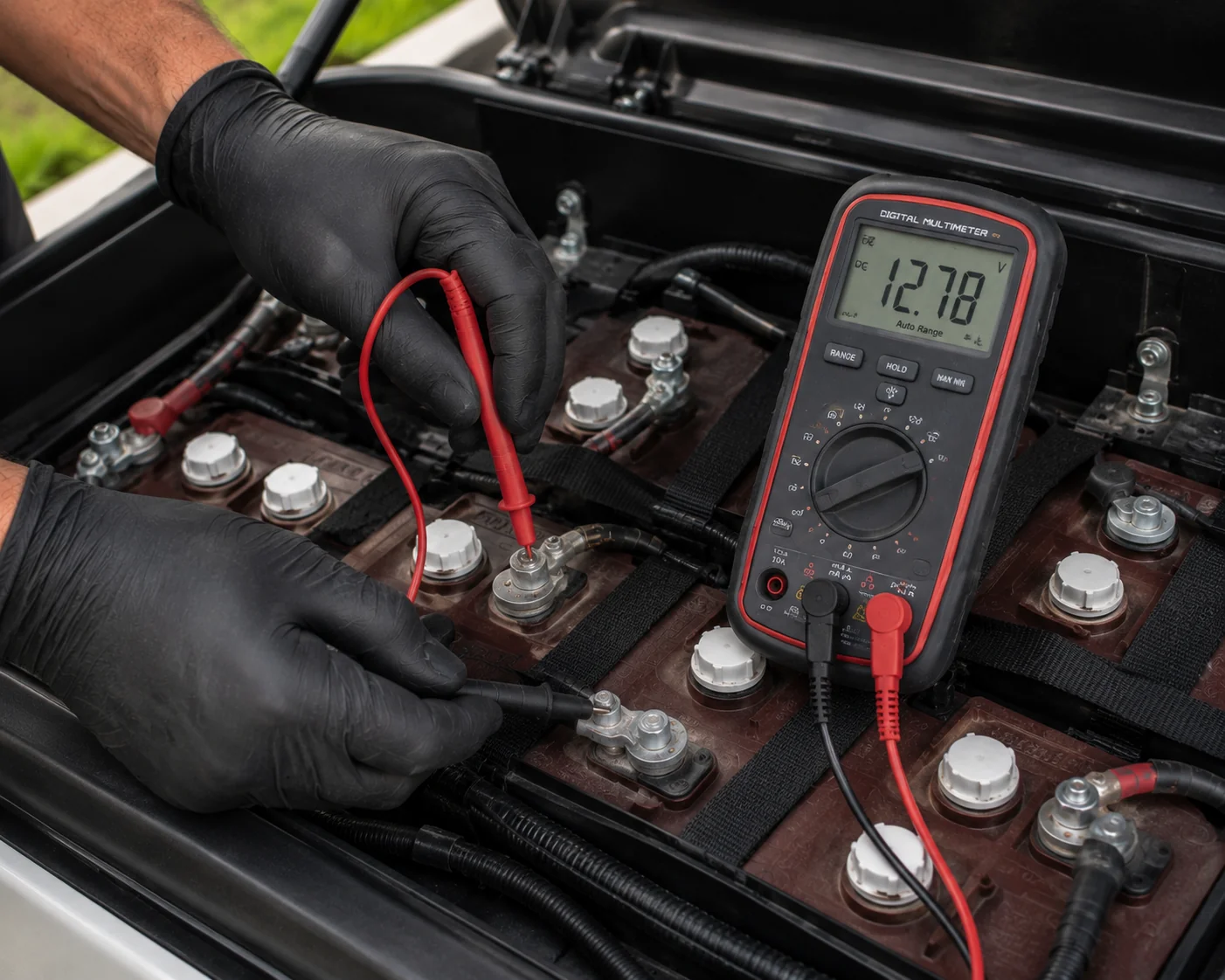
Common signs include noticeably reduced range, slow acceleration even on a full charge, batteries that won't hold a charge overnight, or visible corrosion and swelling on the cases. A technician can load-test each cell to determine whether the pack needs replacement or whether a single bad battery is dragging down an otherwise healthy set.