Golf Cart Tire Repair vs. Replacement: Which Do You Need?
Most golf cart tire damage can be repaired with a patch or plug if the puncture is small, located in the center tread, and the tire still has usable life left. If the damage sits on the sidewall, the tire is worn thin, or the structure is compromised, replacement is the safer and more cost-effective long-term choice. Knowing which situation you are in saves you money and keeps you from putting a band-aid on a tire that will fail again. Learn more about Golf Cart Tire Repair.
Where the Damage Is Located Changes Everything
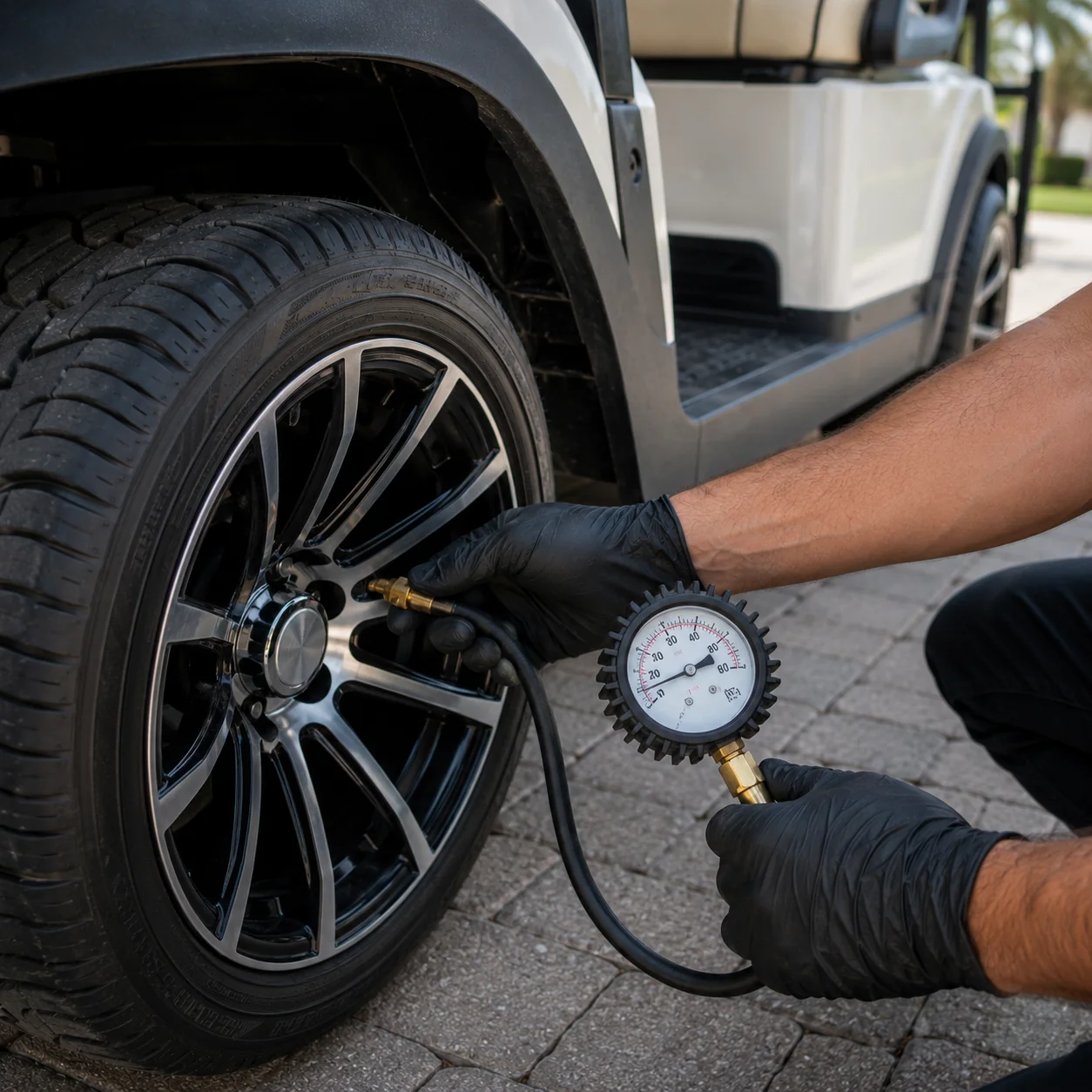
The single most important factor in the repair-versus-replace decision is where on the tire the damage occurred. A puncture in the center two-thirds of the tread is generally repairable because that area is reinforced and holds a patch or plug reliably. Damage within an inch of the sidewall, or on the sidewall itself, cannot be safely repaired because the sidewall flexes constantly under load, causing any repair to fail quickly. If you are not sure where the damage falls, a technician can measure it against the tire's repairable zone before you commit to either option.
Tire Age and Wear Matter as Much as the Puncture
Even a perfectly placed puncture does not automatically mean you should repair the tire. If the tread is worn down close to the wear indicators, or the rubber shows cracking and dry rot along the sidewalls, patching it only delays the inevitable. Golf cart tires in warm, sunny climates like The Villages tend to age faster from UV exposure than from mileage, so a tire that looks lightly used can still be structurally compromised after four or five years.
A good rule of thumb is to look at the remaining tread depth and the condition of the rubber overall. If the tire has plenty of tread left and the rubber is still supple, a repair makes financial sense. If you were already thinking the tires were due soon, a puncture is a reasonable trigger to replace all four at once rather than patch one and replace the others a few months later.
- Check for sidewall cracking or bulging before deciding to repair
- Tread depth below 2/32 of an inch is a replacement signal regardless of the puncture
- Dry rot is a safety issue that no patch can fix
- Replacing tires in pairs or sets keeps handling balanced
Repair or Replace? Six Factors to Weigh
Run through these factors before making a final call on your damaged tire.
Puncture size:
Holes up to about a quarter inch in diameter are generally patchable. Larger punctures, tears, or gashes typically require replacement because the structural integrity is too compromised.
Damage location:
Center tread punctures are repairable. Sidewall damage is not. Even a small sidewall cut creates a weak point that can blow out under normal cart weight.
Tire age:
Tires older than four to five years in a sunny climate should be inspected closely for dry rot and UV degradation before committing to a repair rather than replacement.
Tread depth:
If tread is already low, a repair just postpones a replacement purchase by a short time. It is often more economical to replace now and avoid a second service call.
Number of prior repairs:
A tire that has already been patched once is generally not a good candidate for a second repair. Multiple patches weaken the structure and increase blowout risk.
Cost comparison:
A plug or patch typically costs a fraction of a new tire. If the tire qualifies for repair, fixing it is the clear value. If it does not qualify, paying for a repair only to replace the tire soon after wastes money.
What a Professional Inspection Tells You That a Visual Check Cannot
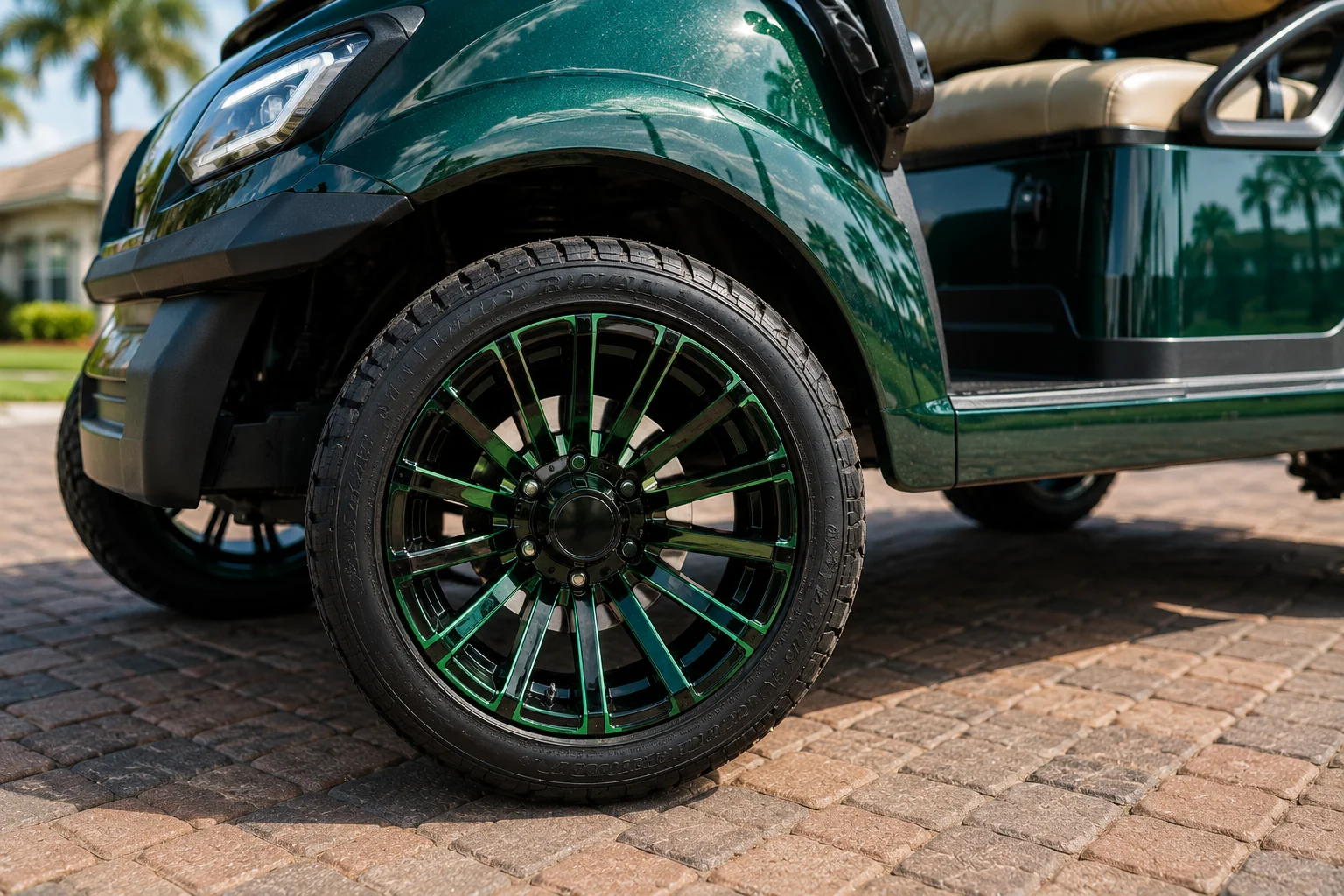
It is easy to spot an obvious nail or a flat tire, but internal damage from hitting a curb, a slow leak from a bead seal failure, or a developing sidewall crack can be invisible until the tire fails on the road. A technician will dismount the tire, inspect the inside liner for damage that does not show from the outside, and check the rim and bead area for corrosion or bending that could cause a new leak even after a repair. In many cases, a five-minute professional look prevents a repeat service call and gives you a clear answer on whether repair or replacement is the right move for your specific tire.
Related Guides
Previous: Warning Signs Your Golf Cart Tires Need Repair or Replacement | Next: How Much Does Golf Cart Tire Repair Cost? A Complete Price Guide
Frequently Asked Questions
Can a golf cart tire be plugged the same way a car tire is?
Yes, the plugging process is similar, but golf cart tires are smaller and thinner, so the repair needs to be done carefully to avoid over-stressing the surrounding rubber. A combination patch-plug from the inside is generally more reliable than a plug alone. Always have a technician confirm the damage is in the repairable zone before proceeding.
How long does a patched golf cart tire last?
A properly installed patch on a tire in good condition can last the remaining life of that tire, often several more years of normal use. The patch itself is not usually the weak point. The tire's overall age and rubber condition determine how much life is left after the repair.
Is it safe to drive on a slow leak until I can get it repaired?
Driving on a significantly underinflated tire is hard on the sidewalls and can turn a simple repair into a replacement situation. If the leak is very slow and you are monitoring pressure closely, a short trip to a repair shop is reasonable. Continuing to drive on it for days risks damaging the tire beyond repair and can affect cart handling.
Do I need to replace all four tires at once?
You do not always have to replace all four, but replacing tires in pairs on the same axle keeps handling and wear even. If one tire is significantly more worn than the others, replacing all four at once can be the most practical choice to avoid mismatched traction and uneven steering.
What causes most golf cart tire punctures in retirement communities?
Road debris, small screws and nails from nearby construction, and curb strikes are the most common culprits. Thorns from landscaping plants are also a frequent cause in communities with heavy vegetation. Keeping tires properly inflated reduces the risk of damage from road hazards because a firm tire is less likely to pinch or cut on impact.
How do I know if my golf cart tire has a bead leak versus a puncture?
A bead leak occurs where the tire seals against the rim rather than through the tread. You can often detect it by applying soapy water around the rim edge and watching for bubbles while the tire is inflated. Bead leaks are sometimes fixed by reseating and resealing the tire, but a corroded or bent rim may require rim replacement alongside a new tire.